
EAU Patient Office EPAG Meeting, Noordwijk, June 2026
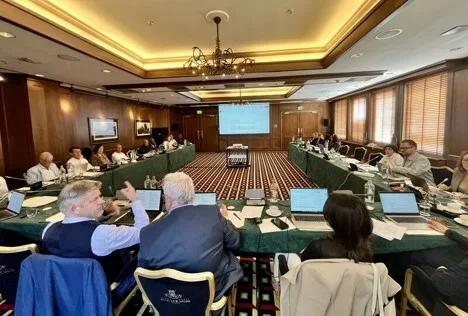
On Thursday 4 June at the Grand Hotel Huis ter Duin in Noordwijk, the EAU Patient Office and the European Patient Advocacy Group (EPAG) members met for their biannual meeting.
The meeting provided an opportunity to review ongoing initiatives such as:
- Progress being made across the Patient Reported Outcome Measurement Survey studies (PROMs) of BALANCE and OAB-REVEAL, the very first research surveys of their kind within urological healthcare
- Update and share progress of the EU co-funded BCLEAR project
- Shape ideas for roundtable and theatre session topic discussions for EAU27 in Amsterdam

The Patient Office has long championed the practice of shared decision-making (SDM), recognising it as a key approach to delivering more personalised and patient-centred care for individuals living with long-term health conditions.
Participants highlighted a range of practical barriers that can limit its effective use in routine clinical practice. These included limited consultation time, which may constrain opportunities for meaningful discussion of treatment options and patient preferences.
Health literacy challenges were also noted, as some patients may struggle to understand complex medical information, making it more difficult for them to participate fully in decision-making processes.
Members stressed the need for improved communication training for healthcare professionals to support more effective patient engagement, facilitate clear and balanced discussions about risks and benefits, and ensure that patients feel empowered to contribute to decisions about their care.
Vice-Chair Michael van Balken then examined plans for a new Shared Decision-Making Think Tank. This Shared Decision-Making (SDM) Think Tank would function as a multidisciplinary expert group focused on improving how patients and healthcare professionals make healthcare decisions together. Its role would be strategic, advisory, educational, and innovation-oriented rather than purely operational.
Progress across major Patient Office projects
The Patient Office gave updates on several international research and advocacy initiatives.
BALANCE
The Diversity in PCa PROMs Study, or BALANCE Study for short, is a project the first of its kind, focusing on Patient Reported Outcome Measurements (PROMs) on better understanding how prostate cancer impacts Black men of African and Caribbean ancestry, as well as men of mixed ethnic backgrounds. These groups have historically been underrepresented in research, despite facing higher risks and more aggressive forms of the disease. Along with key prostate cancer healthcare stakeholders, the Patient Office is launching a PROMs survey in Angola, the Netherlands, Sierra Leone, Suriname, and the UK, and men of mixed ethnicity in Brazil. This will better capture the voices, concerns, and perspectives that directly come from a minority patient with lived experience of the disease.
What is the current progress of the BALANCE Study?
The EPAG Meeting revealed that ethical clearance through Erasmus University in Rotterdam, the Netherlands, has been obtained. The survey is anticipated to launch in the Netherlands in June 2026, with ethical review and approval processes ongoing in the remaining participating countries.
The Patient Office couldn’t be more excited about launching the survey, and amplifying the voice of a key group that has long been underrepresented in research.
REVEAL-OAB
Through PROMs survey insights that the Patient Office is leading, The REVEAL-OAB study seeks to reveal what it is really like to live with OAB. The study is conducted through multiple centres in eight countries across Europe: Germany, France, Italy, Poland, Spain, Sweden, the Netherlands and the UK. Focusing on the patient’s own experiences of OAB, the study will help improve care and support for people living with the condition.
What is the current progress of the REVEAL-OAB Study?
The survey is expected to launch in Italy and the Netherlands in June 2026, followed by Germany, Poland, Spain, and the United Kingdom in July 2026. France and Sweden are expected to launch in August 2026. The findings of the REVEAL-OAB study will be presented at the EAU27 Congress in Amsterdam.
BCLEAR
EPAG members also received an update on BCLEAR, the EU4Health-funded project focused on bladder cancer health literacy and shared decision-making, from Michael van Balken and World Bladder Cancer Patient Coalition’s Executive Director Alex Filicevas.
BCLEAR initially focuses on three pilot countries - Poland, Hungary, and Greece - with strong involvement from national urological societies and nursing organisations in those countries. The goal of the project is to develop a comprehensive shared decision-making framework and resource library that optimises SDM for bladder cancer patients and can ultimately serve as a model for adoption across Europe.
The discussion at the EPAG Meeting also covered the project's ongoing needs assessment, which is exploring healthcare professionals' understanding and use of shared decision-making in clinical practice. Early findings indicate that many urologists feel they have received insufficient training in SDM, particularly in areas such as communication skills, psychological support, and patient engagement.
Growing reach of Patient Information resources
The Patient Information website continues to expand its reach across Europe, with new language translations continuously being introduced and existing content updated in line with the latest EAU Guidelines.
Greek and Hungarian translations are now fully available. Dutch, German, and Portuguese translations are expected to be launched in the second half of 2026, with additional European language translations planned thereafter.
The EAU Policy often collaborates with the EAU Patient Office on intersecting patient causes and conditions.
During the Noordwijk meeting, Sarah Collen, EAU Policy Manager, outlined several ongoing initiatives where patient perspectives are helping to shape European healthcare policy.
Updates by the Policy Office included:
- the continuation of the PRAISE-U prostate cancer screening programme,
- new work on bladder cancer policy collaboration,
- implementation of the European Health Data Space,
- new production of kidney cancer white paper,
- UroEvidenceHub and Real-World Data Collection
Patients and Sustainability
The meeting ended with a focused look on improving sustainability in the EAU. The EAU Young Urologists Office (YUO) Go Green Project was presented on, the goal being to make urological practice more environmentally sustainable. Recognising that healthcare and surgery contribute substantially to greenhouse gas emissions, the Go Green Project focuses on:
- Research and evidence generation through collaborative studies and sustainability reporting.
- Greener clinical practice, including waste reduction, energy efficiency, reuse of instruments, and increased use of telemedicine.
- Sustainable EAU events, with environmentally responsible venues, local catering, and carbon offsetting.
The project promotes practical, context-specific measures that can be adopted across different healthcare settings, with the goal of embedding sustainability into routine urological care.
The EAU Patient Office is proud to support environmentally friendly initiatives in healthcare wherever possible.
Strengthening collaboration with National Societies
The EAU Patient Office also participated in the National Societies ‘Meet the Offices’ breakout sessions held on Friday 5 June. The session was well attended, with representatives from national urological societies in Albania, Austria, Georgia, Greece, Hungary, Italy, Latvia, and the United Kingdom joining discussions on patient engagement, patient information, and shared decision-making initiatives.
A key area of interest was the work of the EAU Patient Office itself. Representatives from the British Association of Urological Surgeons (BAUS) were particularly interested in learning more about how the Patient Office was established and has evolved over recent years. Discussions covered the Office's strategic priorities, including Patient-Reported Outcome Measure (PROMs) research, EU-funded projects, shared decision-making initiatives, the establishment of the EAU Patient Advocacy Group (EPAG) and the continued development of the EAU Patient Information website and decision-support tools.
Attendees were shown the recently launched Greek and Hungarian versions of the EAU Patient Information website, including the integration of AI-powered chatbot functionality. These examples demonstrate how partnerships between the EAU Patient Office and national societies can help expand access to reliable, evidence-based patient information across Europe.
Overall, the session highlighted the growing interest among national societies in patient-centred initiatives and resulted in several promising collaborations that will continue to develop in the coming months.