

Related topics for further reading
If changes to your diet, bladder training, and pelvic floor exercises haven’t helped enough, your doctor may suggest medication as an option.
It’s important to know that, unlike treatments for overactive bladder, no medicines have been proven to be both very safe and effective enough to replace exercises and other first steps for stress urinary incontinence. Medicine might be considered if other treatments don’t work well or aren’t suitable for you.

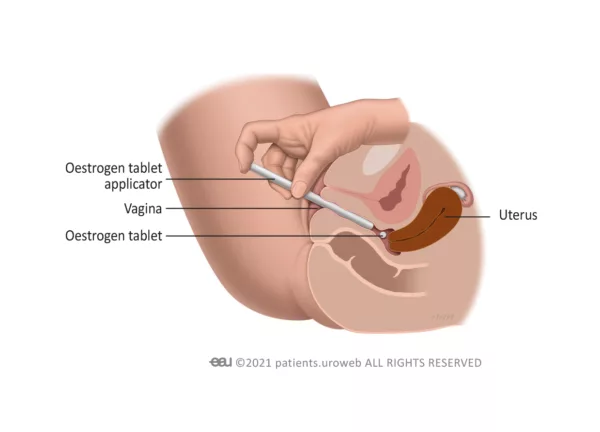
What are the side effects?
When used correctly, vaginal cream, ring or tablet usually don’t cause side effects.
Oestrogen can be used along with other medicines to help treat urinary incontinence.
This chapter contains general information about drug treatment for stress urinary incontinence in women. It is not a substitute for professional medical advice or treatment. Always consult your doctor or healthcare provider for guidance on your individual medical situation.
Last updated: August 2025
Reviewed by:
- Dr. Cyrille Guillot-Tantay (YAU Working Group on Functional Urology)
- Mr. Tomasz Michalek (Patient Office EPAG)